


Why Your Staffy Keeps Licking Their Paws?

If you're a Staffordshire Bull Terrier owner, you've likely noticed your beloved Staffy engaging in excessive paw licking at some point. This behavior, while seemingly innocent, can be a sign of underlying health issues that deserve your attention. Understanding why your dog keeps licking his paws is the first step toward providing relief and ensuring your furry companion's wellbeing. In this comprehensive guide, we'll explore the various reasons behind this behavior, how to identify when it's a serious concern, and what solutions are available to help your Staffy feel more comfortable.
Introduction
Paw licking is one of the most common behavioral complaints among dog owners, and Staffordshire Bull Terriers are particularly prone to this issue. While occasional paw licking is normal grooming behavior, excessive licking can indicate that something is wrong. Whether it's an itch, an infection, anxiety, or pain, your Staffy is trying to communicate discomfort in the only way they know how. As responsible pet owners, it's crucial to recognize when dog licking paws becomes problematic and take appropriate action to address the underlying cause.
The concern isn't just about the behavior itself—constant licking can lead to secondary problems. When dogs keep licking their paws excessively, they can create open wounds, introduce bacteria, and develop infections. This is why understanding the root cause and implementing treatment quickly is so important for your Staffy's health and happiness.
Common Causes of Paw Licking
Allergies
One of the most prevalent reasons your dog keeps licking his paws is allergies. Staffordshire Bull Terriers are particularly susceptible to various types of allergies that can manifest as itchy paws. These allergies fall into three main categories:
Food Allergies: Certain ingredients in your dog's diet can trigger allergic reactions. Common culprits include chicken, beef, wheat, and corn. If your Staffy has a food allergy, you'll likely notice the paw licking accompanied by other symptoms like ear infections, skin rashes, or digestive issues.
Environmental Allergies: Pollen, dust mites, mold, and grass can all trigger allergic responses in dogs. These environmental factors often cause seasonal paw licking, where the behavior intensifies during specific times of the year.
Contact Allergies: Sometimes the irritant is something your dog comes into direct contact with, such as certain cleaning products, grass types, or materials. If your dog itchy paws seem to flare up after walks in certain areas or after using specific products, a contact allergy might be the culprit.
Skin Conditions and Infections
Dog skin allergies can lead to various skin conditions that cause itching and discomfort. Yeast infections and bacterial infections are particularly common in Staffordshire Bull Terriers. These infections thrive in warm, moist environments, making the paws an ideal location for them to develop. If you notice that dogs paws are red from licking or have a distinctive odor, an infection is likely present.
Dermatitis is another common skin condition that causes significant itching. Whether it's atopic dermatitis or contact dermatitis, these conditions require proper diagnosis and treatment to prevent further complications.
Parasites and Fleas
Even if you're diligent about flea prevention, parasites can still affect your Staffy. Fleas are notorious for causing intense itching, and some dogs are particularly sensitive to flea saliva. A single flea bite can trigger hours of scratching and licking. Additionally, mites and lice can cause similar issues, leading to your dog licking paws obsessively.
Anxiety and Boredom
Not all paw licking is caused by physical discomfort. Psychological factors play a significant role in this behavior. Dogs experiencing anxiety, stress, or boredom may resort to excessive licking as a self-soothing mechanism. Staffordshire Bull Terriers are intelligent, energetic dogs that require adequate mental and physical stimulation. Without proper exercise and engagement, they may develop compulsive licking behaviors.
Pain or Injury
Sometimes the simplest explanation is the correct one. Your Staffy might be licking their paws because of an injury, splinter, or thorn lodged in the paw pad. Additionally, arthritis or joint pain can cause dogs to lick the affected area. If the licking is localized to one paw, an injury or pain-related issue is more likely.
Identifying Red Flags
Knowing when dog licking paws becomes a serious concern is essential for timely intervention. Several red flags should prompt immediate veterinary attention:
Visible Signs of Infection: If dogs paws are red from licking, swollen, or have discharge, an infection is likely present. These signs indicate that the constant licking has created an environment where bacteria or yeast can thrive.
Open Wounds or Sores: When excessive licking creates open wounds, the risk of infection increases dramatically. These wounds can become painful and may require professional treatment to heal properly.
Behavioral Changes: If your Staffy seems anxious, withdrawn, or obsessive about their paws, behavioral issues may be contributing to the problem. Some dogs develop compulsive licking habits that require behavioral intervention alongside medical treatment.
Systemic Symptoms: Fever, lethargy, loss of appetite, or other systemic symptoms alongside paw licking suggest a more serious underlying condition that requires veterinary evaluation.
Breed-Specific Considerations
Staffordshire Bull Terriers have a genetic predisposition to certain health issues that make them more prone to skin problems and paw licking. Understanding these breed-specific vulnerabilities can help you be more proactive in managing your Staffy's health.
Staffies are known for having sensitive skin and being prone to allergies. Their short coat, while easy to maintain, doesn't provide as much protection against environmental irritants as longer coats do. Additionally, the breed's genetic makeup makes them more susceptible to both food and environmental allergies compared to many other breeds.
The breed is also prone to certain skin conditions like ichthyosis, a condition that affects skin barrier function. This genetic predisposition means that Staffordshire Bull Terriers may require more specialized care and attention to their skin and coat health compared to other breeds.
Treatment Options
Veterinary Diagnosis and Professional Care
The first step in addressing dog licking paws treatment is obtaining a proper diagnosis from your veterinarian. Your vet can perform various tests, including skin scrapings, fungal cultures, or allergy testing, to identify the underlying cause. Once diagnosed, your vet can recommend appropriate treatment options tailored to your Staffy's specific condition.
Home Remedies and Management Strategies
While professional veterinary care is essential, several home remedies can complement treatment and provide relief. Regular paw soaks in warm water or diluted apple cider vinegar can help soothe irritated skin and reduce bacterial growth. Keeping your Staffy's paws clean and dry is crucial, especially between the toes where moisture can accumulate.
Protective measures like booties or bandages can prevent your dog from licking the affected area while it heals, allowing the skin to recover without constant irritation.
Dietary Changes and Supplements
Nutrition plays a vital role in skin health and immune function. Switching to a limited ingredient diet or an elimination diet can help identify food allergies. High-quality proteins and omega-3 fatty acids support skin barrier function and reduce inflammation.
Breed-specific supplements designed for Staffordshire Bull Terriers can provide targeted support for skin and coat health. These supplements often contain ingredients like fish oil, probiotics, and antioxidants that work together to strengthen the skin barrier and reduce itching.
Topical Treatments
Various topical treatments can provide relief from itching and support healing. Medicated shampoos containing ingredients like oatmeal, coal tar, or antifungal agents can address specific skin conditions. Paw balms and creams can soothe irritated skin and create a protective barrier against environmental irritants.
Prevention Tips
Regular Paw Checks and Grooming
Make paw inspections part of your regular grooming routine. Check between the toes for redness, swelling, discharge, or foreign objects. Regular grooming helps you catch problems early before they develop into serious infections.
Environmental Management
Minimize your Staffy's exposure to known irritants. If certain areas trigger paw licking, try to avoid them or limit exposure during high pollen seasons. Keep your home clean and free from potential allergens, and consider using air purifiers to reduce airborne irritants.
Nutrition and Immune Support
Provide a high-quality diet rich in essential nutrients that support skin health. Ensure your Staffy receives adequate omega-3 and omega-6 fatty acids, which are crucial for maintaining a healthy skin barrier. Consider adding probiotics to support gut health, as a healthy digestive system contributes to better skin health.
When to Seek Veterinary Help
Don't wait for the problem to escalate. If your Staffy's paw licking persists for more than a few days, worsens, or is accompanied by other symptoms, schedule a veterinary appointment. Early intervention can prevent complications and provide faster relief for your dog.
Aralis Animals Solutions
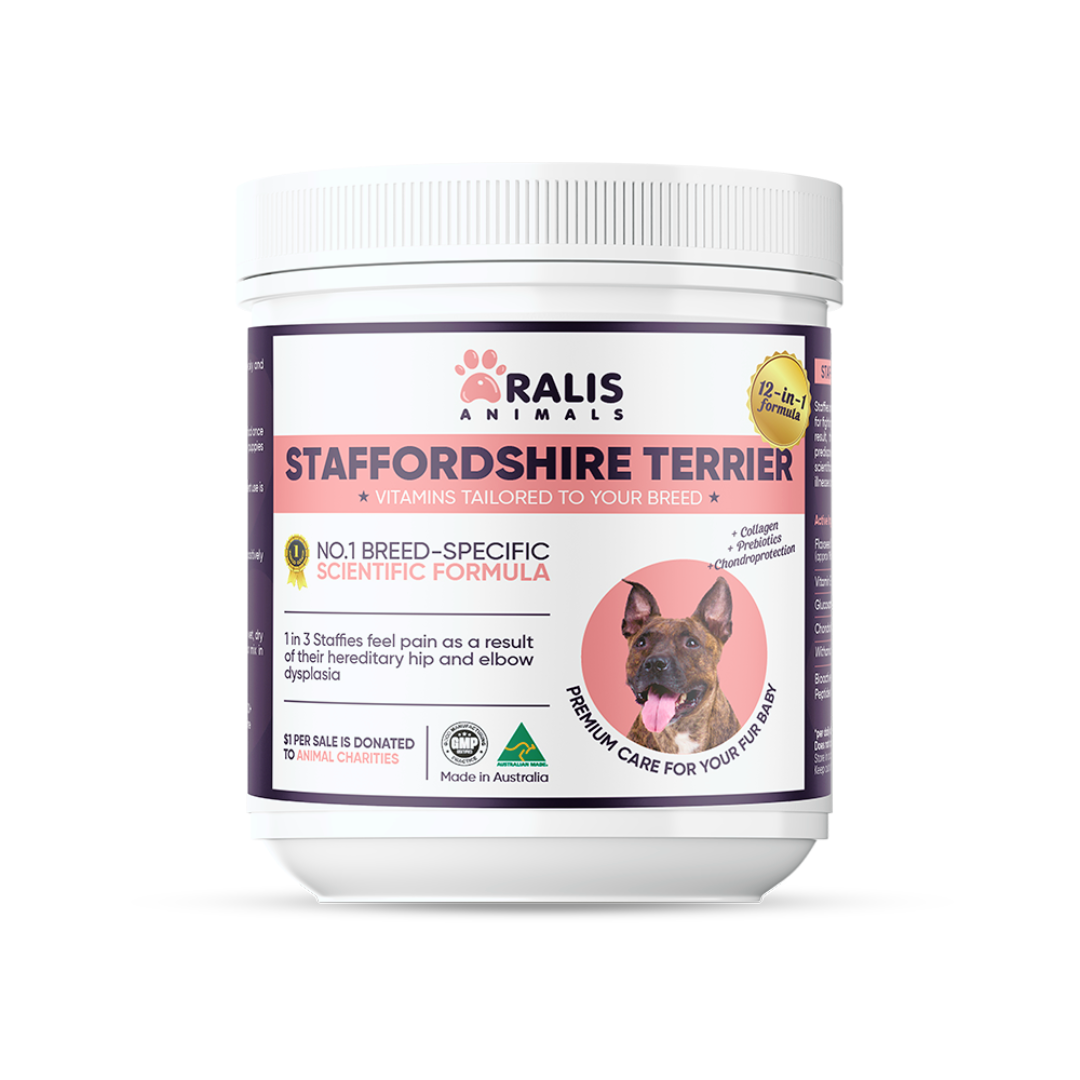
At Aralis Animals, we understand the unique health needs of Staffordshire Bull Terriers. Our Aralis Animals Staffordshire Bull Terrier multivitamins are formulated with probiotics, omega fatty acids, zinc, and skin-supporting nutrients to help maintain gut balance, strengthen the skin barrier, and support pooches struggling with irritated paws and itchy skin.
These carefully selected ingredients work together to support immune function, reduce inflammation, and promote healthier skin from the inside out. By supporting your Staffy’s health through proper nutrition and targeted supplementation, you can help reduce many of the common skin issues linked to excessive paw licking. Explore our tailored Staffy support here.
Conclusion
Excessive paw licking in your Staffordshire Bull Terrier is never something to ignore. Whether it's caused by allergies, skin infections, parasites, anxiety, or pain, addressing the underlying issue is crucial for your dog's health and comfort. By understanding the common causes, recognizing red flags, and implementing appropriate treatment strategies, you can help your Staffy feel better and prevent complications.
Remember that every dog is unique, and what works for one Staffy may not work for another. Working closely with your veterinarian to identify the root cause and develop a comprehensive treatment plan is essential. Combined with proper nutrition, breed-specific supplements, and preventive care, you can significantly reduce paw licking and improve your Staffy's quality of life. If you're concerned about your dog's paw licking behavior, don't hesitate to seek professional guidance and explore the specialized solutions available to support your beloved companion's health and wellbeing.