


Staffordshire Bull Terrier Allergies: Causes, Symptoms, and Long-Term Support

As a proud Staffordshire Bull Terrier (Staffy) owner, you know that these affectionate and loyal companions can face a unique set of health challenges, including skin allergies. Staffies are prone to various skin conditions that can cause discomfort, irritation, and even long-term complications if not properly addressed. In this comprehensive guide, we'll explore the common causes of allergies in Staffies, identify the telltale symptoms, and discuss effective strategies for managing these issues to ensure your beloved pup's overall well-being.
Understanding Staffy Skin Allergies
Staffordshire Bull Terriers are a breed known for their muscular build, friendly demeanor, and often, their susceptibility to skin-related problems. Allergies in Staffies can manifest in a variety of ways, from mild irritation to severe, chronic conditions. These allergies can be triggered by environmental factors, dietary components, or even genetic predispositions within the breed.
Environmental Triggers
One of the most common causes of allergies in Staffies is exposure to environmental allergens. These can include pollen, dust mites, mold, and even certain types of grass or foliage. When a Staffy's immune system overreacts to these harmless substances, it can lead to inflammation, itching, and other unpleasant symptoms.
Food-Related Allergies
In addition to environmental factors, some Staffies may develop food-related allergies. Common culprits include proteins found in certain meats, grains, or dairy products. These allergies can cause digestive issues, skin irritation, and other systemic reactions.
Genetic Predispositions
Certain Staffy bloodlines may be more prone to developing skin allergies due to genetic factors. This can make some individuals more susceptible to various allergens and require more proactive management of their condition.
Identifying Allergy Symptoms
Recognizing the signs of allergies in your Staffy is the first step towards providing effective relief. Common symptoms to watch out for include:
Skin-Related Signs
- Excessive itching and scratching
- Redness, inflammation, or hot spots on the skin
- Recurring ear infections or ear canal irritation
- Hair loss or thinning fur
Behavioral Indicators
- Excessive licking or chewing of the paws or other body parts
- Restlessness or difficulty sleeping due to discomfort
- Changes in mood or activity level
If you notice any of these symptoms, it's important to consult your veterinarian to determine the underlying cause and develop an appropriate treatment plan.
Diagnostic Approaches
Diagnosing the specific allergies affecting your Staffy may involve a multi-step process. Your veterinarian may recommend the following:
Veterinary Examination
A thorough physical examination, along with a review of your Staffy's medical history, can help your vet identify potential triggers and rule out other underlying conditions.
Allergy Testing
Skin or blood tests may be performed to identify the specific allergens that are causing your Staffy's reactions. This information can guide the development of a targeted treatment plan.
Elimination Diets
In cases of suspected food allergies, your vet may recommend an elimination diet, where your Staffy is fed a limited-ingredient diet to help pinpoint the offending food sources.
Treating and Managing Staffy Allergies
Once the underlying cause of your Staffy's allergies has been identified, your veterinarian can recommend a comprehensive treatment plan to provide relief and prevent long-term complications.
Medication
Depending on the severity of the allergies, your vet may prescribe antihistamines, corticosteroids, or other medications to reduce inflammation and itching.
Topical Treatments
Soothing topical creams, ointments, or shampoos can help alleviate skin irritation and promote healing.
Dietary Modifications
If food allergies are a factor, your vet may suggest switching to a hypoallergenic or limited-ingredient diet to eliminate problematic ingredients.
Long-Term Management Strategies
Effectively managing your Staffy's allergies often requires a multi-faceted approach, with a focus on prevention and ongoing monitoring.
Prevention Techniques
- Minimizing exposure to known allergens
- Regularly grooming and bathing your Staffy to remove irritants
- Using high-quality, hypoallergenic products for your Staffy's care
Nutrition and Supplements
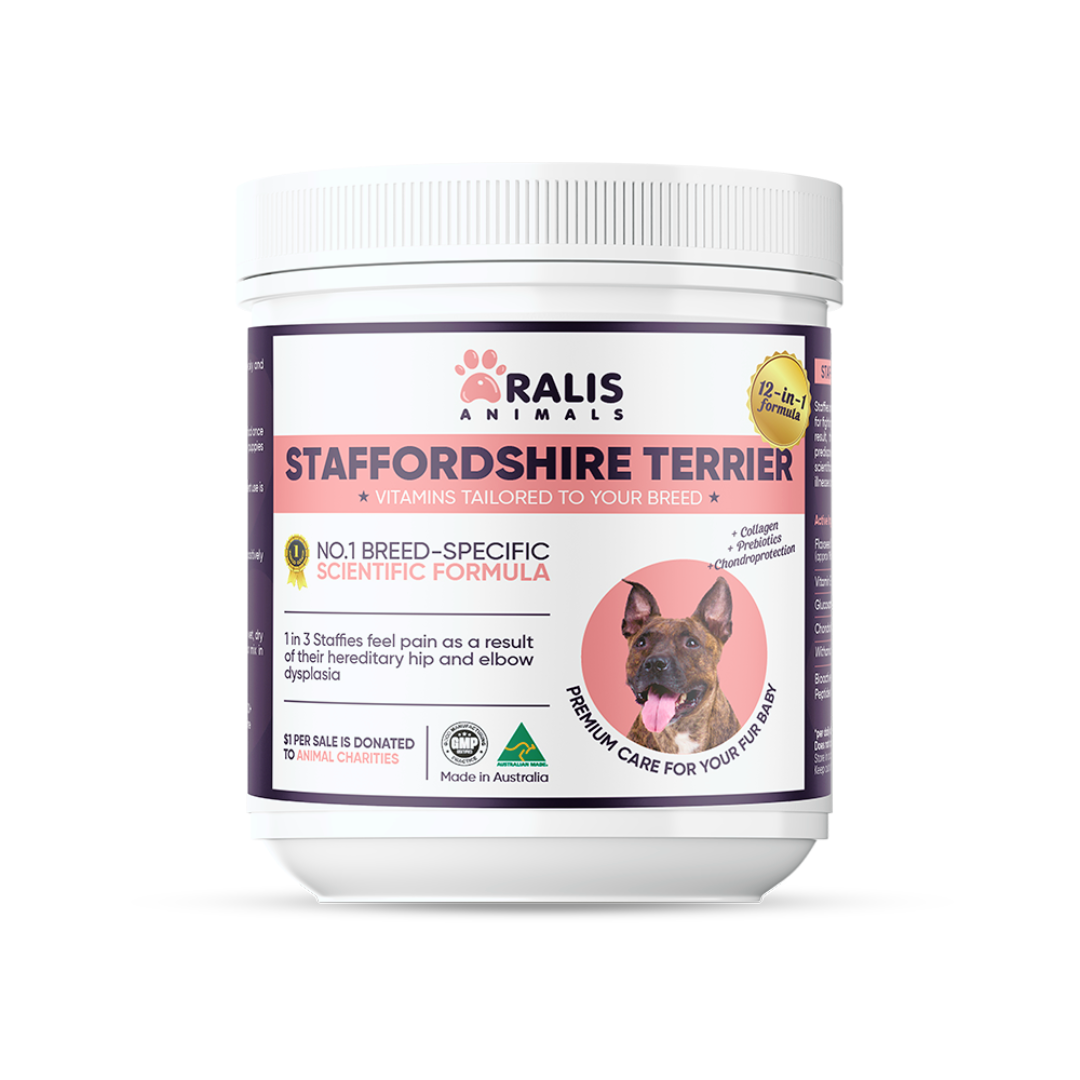
Incorporating breed-specific supplements and a balanced, allergy-friendly diet can help support your Staffy's skin health and overall well-being. If you’re looking for a gentle and breed-focused way to support your Staffy’s allergies from the inside out, you might also consider adding Aralis Animals Multivitamins to their routine. This daily formula is designed for sensitive-skin breeds like Staffies, helping calm inflammation, strengthen the gut barrier, and support healthier skin long-term. You can explore it here if you’d like to see how it complements your vet’s allergy plan.
Regular Monitoring
Maintaining regular veterinary check-ups and closely observing your Staffy's skin and behavior can help you identify any changes or new triggers, allowing for proactive management.
Conclusion
Staffordshire Bull Terriers are beloved companions, but their susceptibility to skin allergies can be a significant challenge for owners. By understanding the common causes, recognizing the symptoms, and implementing a comprehensive management plan, you can help your Staffy live a comfortable, healthy life. Remember, with the right support and care, your Staffy can thrive, despite the unique skin-related issues they may face.