


Food vs Environmental Allergies in Dogs: How to Tell What's Affecting Your Staffy

As a Staffy owner, you've likely encountered the frustrating reality of dealing with your beloved pup's skin irritations and incessant scratching. While it's easy to assume that fleas or dry skin are the culprits, the truth is that many Staffies suffer from either food-related or environmental allergies. Understanding the difference between these two types of allergies is crucial for providing your furry friend with the proper care and relief.
Understanding Dog Allergies
Allergies in dogs can manifest in a variety of ways, from skin irritation and digestive issues to respiratory problems. The two main categories of allergies are food allergies and environmental allergies.
Food allergies are caused by the immune system's reaction to specific proteins found in your dog's diet. These proteins can be from common ingredients like beef, chicken, or dairy. Environmental allergies, on the other hand, are triggered by substances in your dog's surroundings, such as pollen, dust mites, or even certain types of grass.
The symptoms of these two types of allergies can be quite similar, making it challenging to determine the root cause. However, there are some distinct differences that can help you identify the source of your Staffy's discomfort.
Food Allergies
Dogs with food allergies often experience gastrointestinal issues, such as vomiting, diarrhea, or excessive gas. They may also develop skin irritations, including hot spots, rashes, or chronic ear infections. These symptoms can be persistent and may not improve with changes in your dog's environment.
Common food allergens for Staffies include beef, chicken, dairy, and wheat. If you suspect your Staffy has a food allergy, it's essential to work with your veterinarian to identify the culprit through an elimination diet or allergy testing.
Environmental Allergies
Environmental allergies in Staffies are often characterized by skin irritation, such as excessive itching, redness, or even hair loss. These symptoms are typically more seasonal, with flare-ups occurring during specific times of the year when certain allergens are more prevalent.
Staffies can be allergic to a wide range of environmental triggers, including pollen, dust mites, mold, and even certain types of grass or plants. These allergies can be year-round or seasonal, depending on the specific allergens your dog is sensitive to.
Diagnostic Approaches
Determining the cause of your Staffy's allergies can be a process of elimination, but it's essential to work closely with your veterinarian to ensure an accurate diagnosis. Your vet may recommend an elimination diet, where your dog is fed a limited-ingredient diet for several weeks to identify any food-related triggers.
Allergy testing, either through blood work or intradermal skin testing, can also help pinpoint the specific environmental allergens affecting your Staffy. These tests can provide valuable information to guide your treatment plan and management strategies.
Treatment and Management
Once you've identified the source of your Staffy's allergies, the next step is to develop a comprehensive treatment and management plan. For food allergies, this may involve switching to a hypoallergenic diet or using limited-ingredient dog food. Environmental allergies may require a combination of strategies, such as:
- Reducing exposure to known allergens
- Using medicated shampoos or topical treatments to soothe skin irritation
- Administering antihistamines or other medications prescribed by your veterinarian
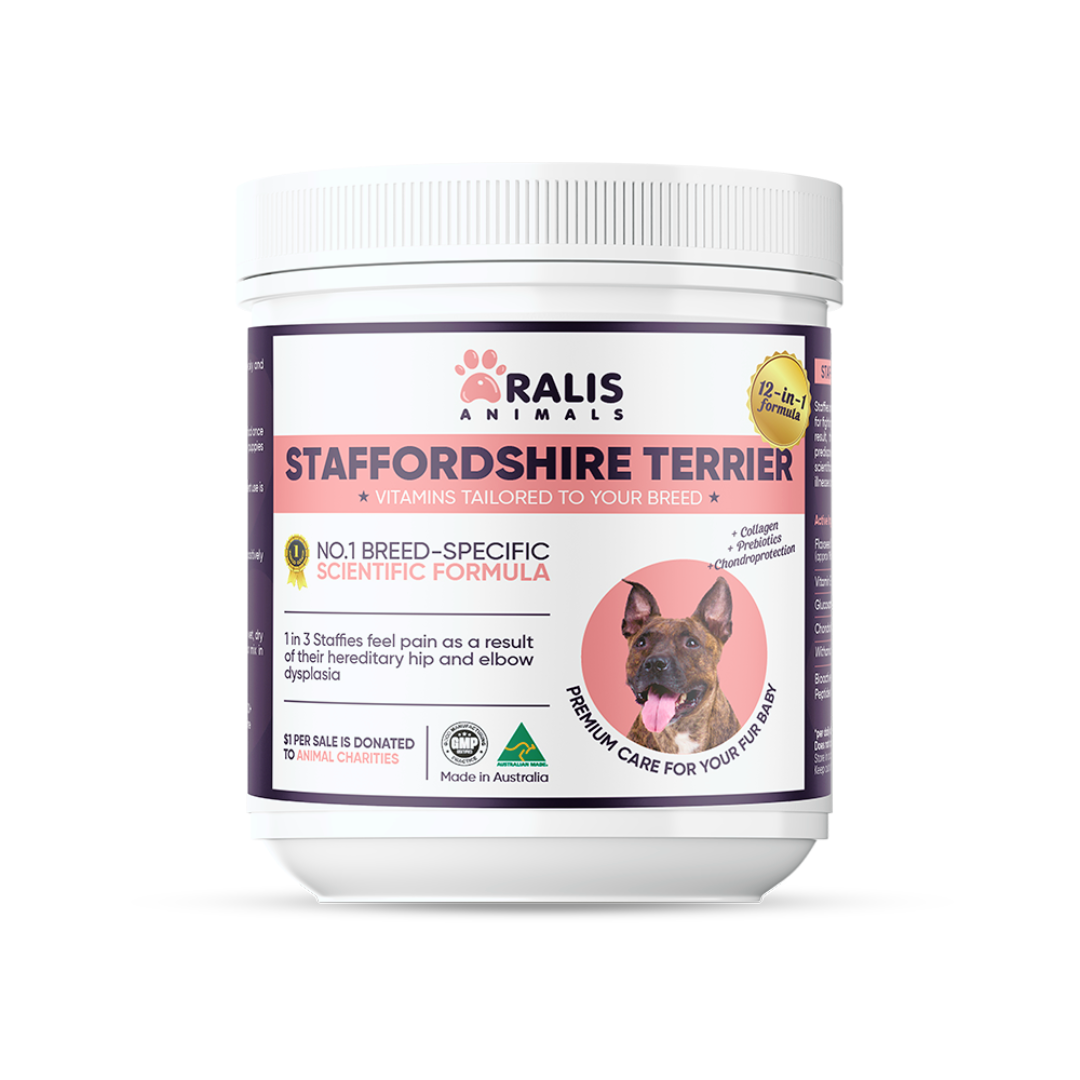
Maintaining your Staffy's overall skin and coat health through regular grooming and supplements can also help manage allergy symptoms and prevent flare-ups. To support Staffy skin and gut health from within, click here to explore Aralis Animals Multivitamins, formulated with zinc for skin repair and Saccharomyces boulardii to support digestion and immune balance.
Prevention Tips
While you can't always prevent your Staffy from developing allergies, there are steps you can take to reduce the risk and minimize the impact on your pup's quality of life:
- Regularly vacuum and clean your home to remove dust, pollen, and other environmental allergens
- Consider using a HEPA air purifier to filter the air in your living spaces
- Bathe your Staffy regularly with a gentle, hypoallergenic shampoo
- Provide a balanced, high-quality diet to support your dog's immune system
- Schedule regular veterinary check-ups to monitor for any changes or emerging allergy symptoms
By understanding the differences between food and environmental allergies in Staffies, you can work with your veterinarian to identify the root cause of your dog's discomfort and implement effective management strategies. With the right approach, you can help your beloved Staffy live a happy, itch-free life.
Conclusion
Allergies in Staffies can be a frustrating and complex issue, but with the right knowledge and care, you can help your furry friend find relief. By recognizing the signs of food-related and environmental allergies, and working closely with your veterinarian, you can develop a tailored plan to address your Staffy's specific needs. Remember, your dog's well-being is the top priority, and with a little patience and the right treatment, you can help your Staffy thrive.